
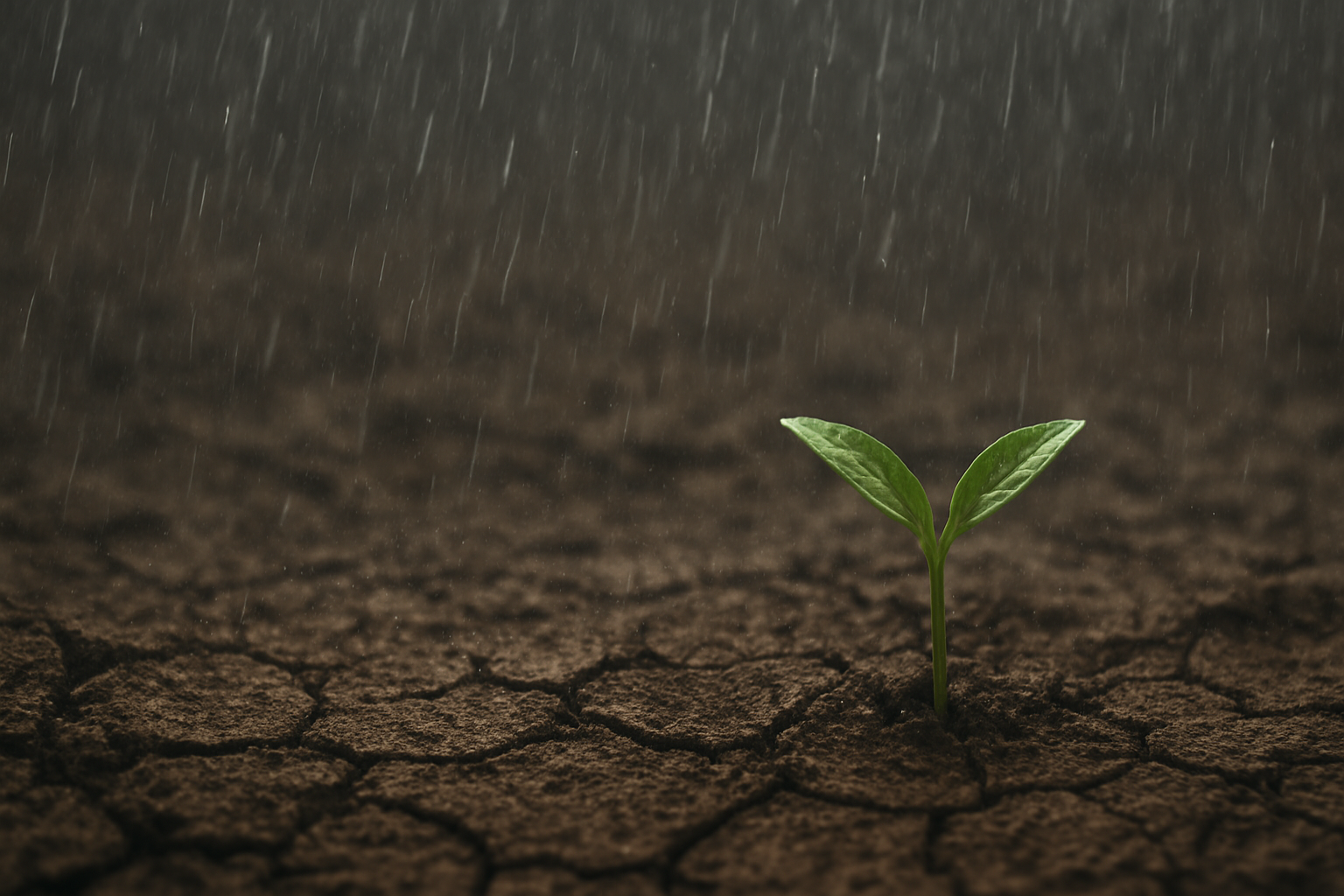
Petrichor: Nature’s Happy Whisper After the First Rain
Introduction
The monsoon is upon us, bringing greenery and sparking new life wherever it reaches. Along with this splash of freshness, it also comes with water—the most essential component for all life and necessary for its very existence. To some, its abundance is taken for granted, its value unrealized; to others, who receive it rarely, even a single drop is precious. Such is nature’s balance, creating space for different life forms with varying water levels, from wetlands to deserts. For all of them, the rain is always a welcome and its arrival waited upon.

The First Rain!
As the first drops of rain kiss the earth, their gentle rhythm immediately draws your attention.
A cool breeze follows, wrapping around you like nature’s own embrace, refreshing your body and spirit.
The entire atmosphere feels just right — the kind that makes you crave a hot cup of tea or coffee, paired with a fresh snack, so you can simply sit back and enjoy this soulful symphony as the sun dims, and the world slows down.
And then comes the most magical part — that unmistakable earthy fragrance rising from the ground, petrichor, nature’s own perfume.
It’s almost spellbinding, a fragrance so powerful that it announces the arrival of rain even before your eyes can see it or your ears can hear it — a quiet reminder that something beautiful has just begun.
What’s That Smell? – The Science of Petrichor
On 7th March 1964, Isabel Joy Bear and Richard G. Thomas of CSIRO (Australia) coined the term Petrichor to describe the pleasant, earthy smell that follows rain. Their findings were published in the journal Nature, and since then, this word has become the official name for this beautiful natural phenomenon. Nature
Petrichor = Petra (rock) + Ichor (blood of the Greek gods)
Petrichor refers to the plant oils (the Ichor) secreted during long dry spells. These oils slowly seep into the soil or rocks (Petra) over time — almost like godly blood being absorbed drop by drop, day after day.
But that’s not the full story. There’s also geosmin, an alcoholic compound produced by Streptomyces (and other actinomycetes), a type of soil bacteria.
When the first raindrops hit the parched earth, tiny air bubbles form inside the soil. These bubbles rise to the surface and burst, releasing an aerosol of Petrichor and Geosmin into the air — and that is what creates the heavenly smell of rain we all adore.
Petrichor contributes the sweet, fresh notes, while Geosmin adds that earthy, musky undertone. Together, they form one of nature’s most enchanting fragrances. Sadly, this phenomenon is fleeting — the scent lingers only for a few minutes — leaving us longing for the next monsoon or another dry spell before we can experience it again.
Wouldn’t it be wonderful if we could bottle that smell forever?
The Craft of ‘Mitti Attar’
Long before science coined the term Petrichor, Indian perfumers had already discovered a way to capture the scent of the first rain — and bottle it. This fragrant tradition is known as Mitti Attar (literally, “earth perfume”), a craft practiced for over 5,000 years and still alive today in Kannauj, Uttar Pradesh — often called the Perfume Capital of India.
Ancient textual references dating back to the 5th–6th century CE describe this process, proving that the knowledge predates these writings and has been part of Indian heritage for millennia. Passed down from generation to generation, the art has evolved and been perfected with time, yet it remains a time-tested miracle that lets us capture a part of nature itself.
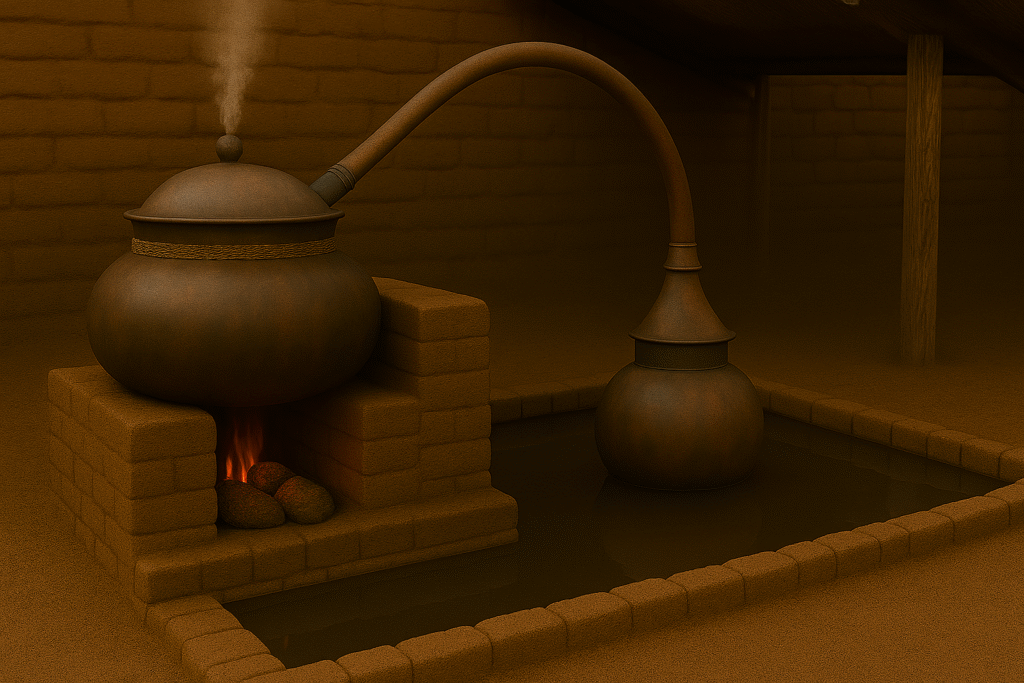
The Process — A Dance of Fire, Clay, and Patience
The making of Mitti Attar is nothing short of fine craftsmanship:
Artisans collect rain-soaked clay from the banks of the Ganges and prepare it for hydro-distillation — a process as delicate as it is ancient.
The clay is placed in a deg (large copper cauldron) and slowly heated over dung-fired ovens, releasing its earthy aroma. The vapors travel through a chonga (hollow bamboo pipe) into a bhapka (receiver vessel) immersed in cool water. There, the vapors condense and are gently absorbed into a base of pure sandalwood oil.
This cycle of slow distillation is repeated over 45–60 days, each round enriching the fragrance until the final batch captures the true essence of monsoon rain.
A Priceless Heritage
While a bottle of mitti attar comes with a price tag, the tradition itself is priceless — a living bridge between human culture, nature, and time. Perhaps this is the oldest and most poetic way humankind has ever preserved the monsoon, turning a fleeting moment of rain into a fragrance that can be experienced year-round.
Why Do We Sense It So Quickly?
Humans are astonishingly sensitive to geosmin — we can detect it at concentrations as low as five parts per trillion. That’s why the smell of rain feels so immediate and unmistakable.
But here’s the fascinating part: scientists still don’t fully understand why we’re so sensitive to it. Perhaps it’s evolutionary — since water is the elixir of life, our ancestors may have developed an acute sense of smell to detect even the faintest clue that water was nearby.
And if you’re feeling curious, here’s a mystery still waiting to be solved: why do bacteria like Streptomyces even produce geosmin? Researchers are still debating this, and each new study reveals a little more about the hidden relationship between microbes, soil, and life itself.
Nature continues to hold its secrets — sometimes quite literally right under our nose.
Ciao!
For more such intriguing article checkout our Knowledge Center.