
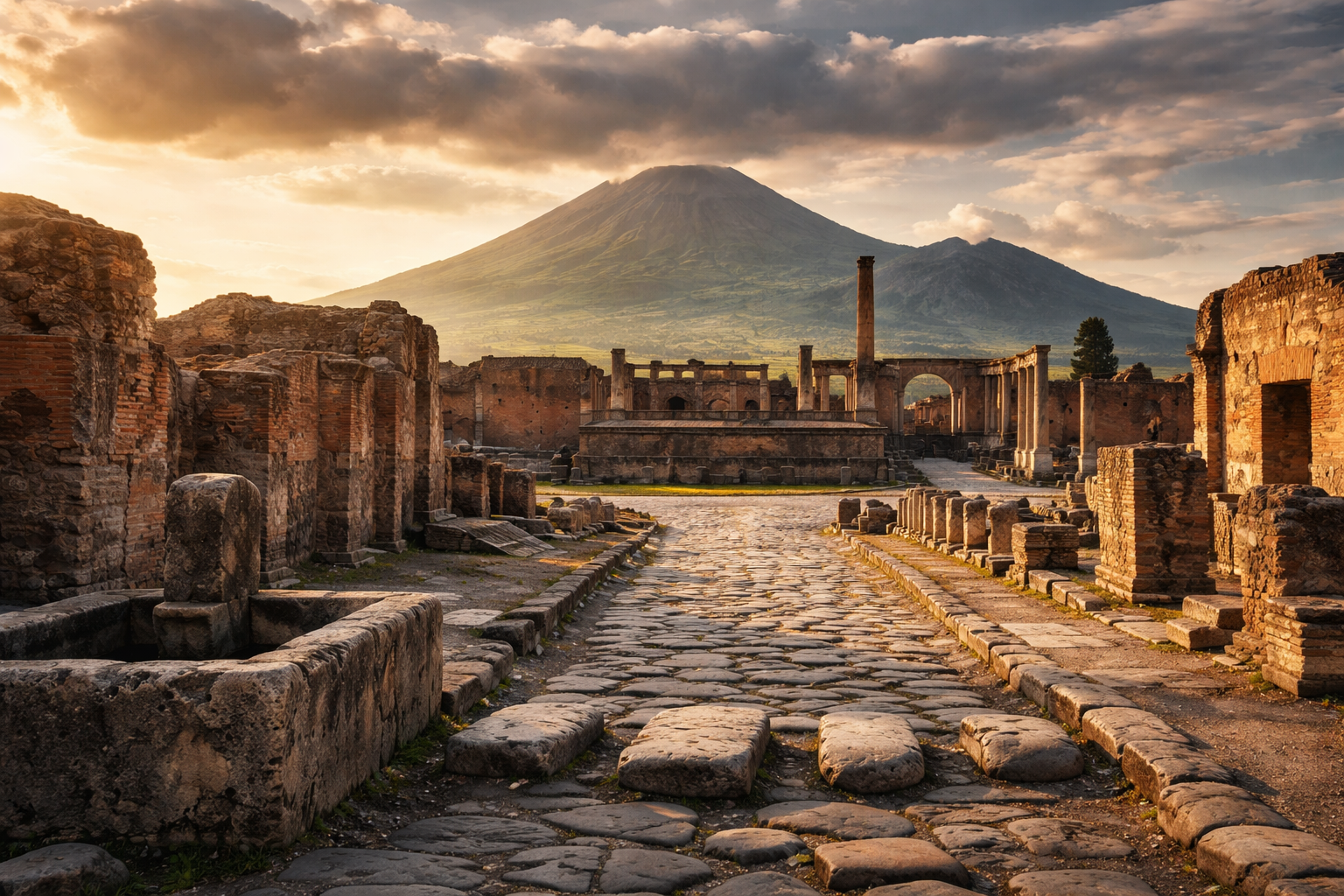
Pompeii: Where a City Died but History Lives!
Rome was not built in a day, but part of its world was destroyed in one.
Pompeii, a newly Romanised city still recovering from a devastating earthquake in 62 AD, was buried under volcanic ash in 79 AD and rediscovered in 1592.
This devastating incident, in disguise, transformed Pompeii into something unique. The city was frozen in time. Its future was abruptly ended, yet its present was preserved in a way that is painful and impossible to imagine. Streets, homes, markets and lives were sealed exactly as they were on the day Mount Vesuvius erupted.
If you ever get a chance to visit Pompeii, pause for a moment. You are not merely walking through ruins. You are travelling nearly two millennia into the past. Pompeii remains the only place on Earth where an entire Roman city survives almost intact, offering an unfiltered glimpse into everyday life during Rome’s golden age.
It feels like time travel. These streets were last walked by people who lived and died just around the corner. Every new excavation feels like witnessing the final moments of that place on the fateful day. Nearly one third of the city is still buried, with history waiting patiently beneath the surface, holding stories yet to be told.
The Day the Mountain Woke
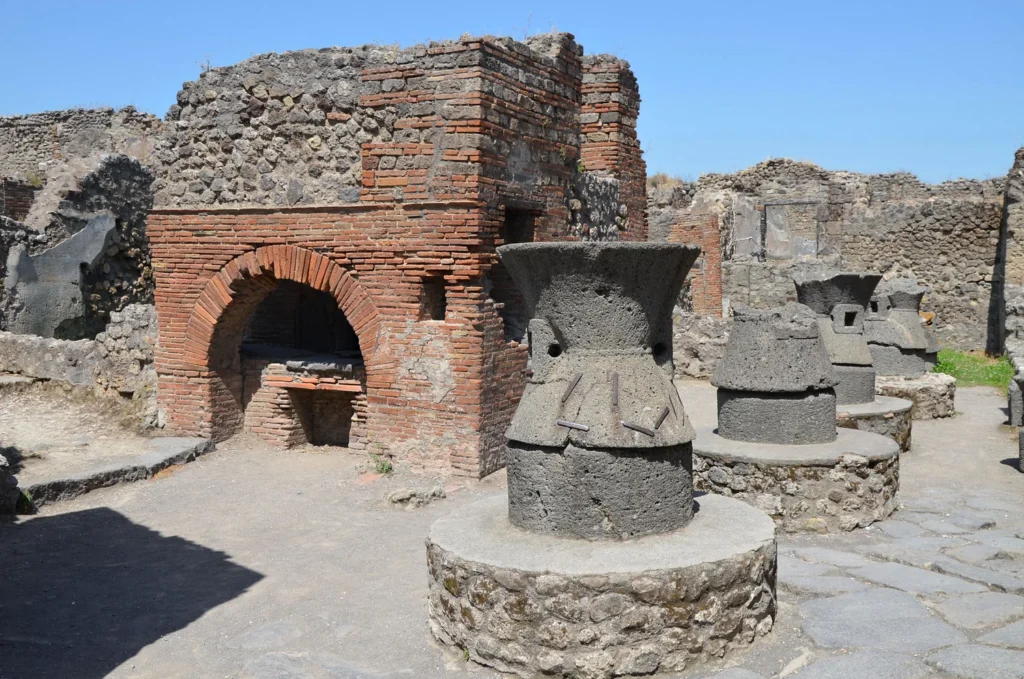
It was an ordinary day in Pompeii. The streets were busy. Bakers slid stamped loaves into ovens, filling the air with the warm smell of fresh bread and olive oil. Wine sellers rolled heavy amphorae through narrow streets. Election notices and slogans were being painted on walls across the city. Markets overflowed with fresh fruits, vegetables, and daily necessities. Children ran about, laughing and chasing one another. Nothing felt unusual. It was just another regular day in Pompeii.
It was likely late October. A charcoal inscription scratched onto a wall reads “XVI Kalendas Novembres”, sixteen days before November. The air would have been cooler. People wore heavier cloaks, and baskets were filled with autumn fruits.
Almost a decade and a half earlier, a powerful earthquake had shaken the city. Temples cracked. Houses collapsed. A few hundred people died. Emperor Nero sent aid, but rebuilding was slow. Repairs were still visible everywhere. Life had resumed, yet the scars were healing gradually.
In the background stood Mount Vesuvius, its slopes green and fertile. Vineyards climbed its sides. It looked peaceful, almost picturesque. No one living remembered it as a volcano.
When the first tremors came, they were not alarming. Earthquakes were familiar. But then the sky darkened. Ash rose higher than the clouds. Stones began to fall, as if hurled from the underworld itself. By nightfall, roofs collapsed under the growing weight. By the next day, waves of heat and gas swept through the streets.
Ash buried almost the entire city. Those trapped beneath remained there forever. People, bread, fruit, wine, animals, all came to a sudden halt. Within a couple of days, Vesuvius turned a bustling city into a graveyard, sealing life exactly as it was, for centuries to come.
Rediscovered and Silenced
Pompeii remained hidden for more than fifteen centuries.
In 1592, Domenico Fontana was not searching for history. He was a practical man, an engineer employed by the Spanish Viceroy of Naples to build a water channel diverting the Sarno River.
Fontana was no ordinary builder. He had raised ancient obelisks in Rome, including the Vatican Obelisk, using daring engineering that impressed popes and kings alike. He understood power. He understood danger.
When his workers broke into painted rooms near Civita, what they found was unsettling. Pagan gods. Explicit sexual imagery. Human remains.
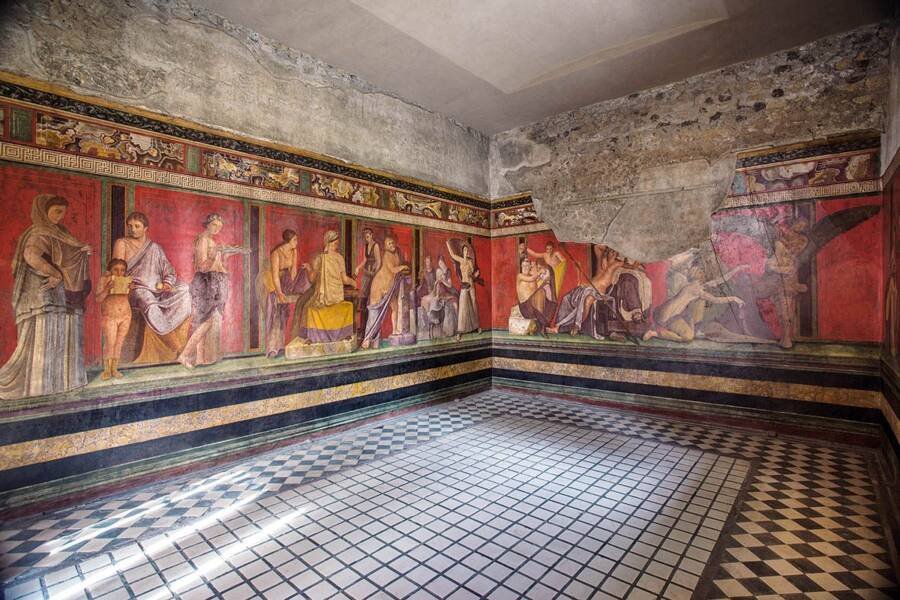
This was Counter Reformation Italy. The Church was tightening its grip. It was an age when deviation invited punishment. Only a few years later, Giordano Bruno would be burned alive for heresy. To report erotic Roman art was to invite suspicion, censorship, or destruction.
Fontana made a calculated decision. He rerouted the tunnel. He ordered the rooms buried again. He left no official record.
Fontana knew the value of what he had uncovered, but fear outweighed curiosity. Under the shadow of the Holy Cross, Pompeii was silenced once more, returned to the earth for centuries, as if no one had ever come across.
When Kings Turned Pompeii into a Prize
Not because it was remembered, but because it was stumbled upon again. Excavations at nearby Herculaneum had stirred curiosity, and reports of buried walls and ancient stones beneath farmland near Pompeii began to circulate. There were no maps to guide them, no records left behind. Only rumours, chance trenches, and the promise of buried antiquity.
Charles of Bourbon, king of Naples, was young, ambitious, and eager to rival Europe’s great courts. Antiquity fascinated him. Possessing Rome’s past was a way to legitimise power, to place his rule in a longer and grander story.
Excavation began under Roque Joaquín de Alcubierre, a soldier by training. His methods were forceful and impatient. Walls were smashed through. Frescoes were cut out with saws. Objects were removed without recording where they belonged or how they had once been used.
Erotic art from brothels and private homes posed a problem. The Church could not destroy what was already celebrated as ancient, yet it could not allow it to be seen. These pieces were hidden away, locked behind doors, forming what later became the Secret Cabinet in Naples, accessible only to select men.
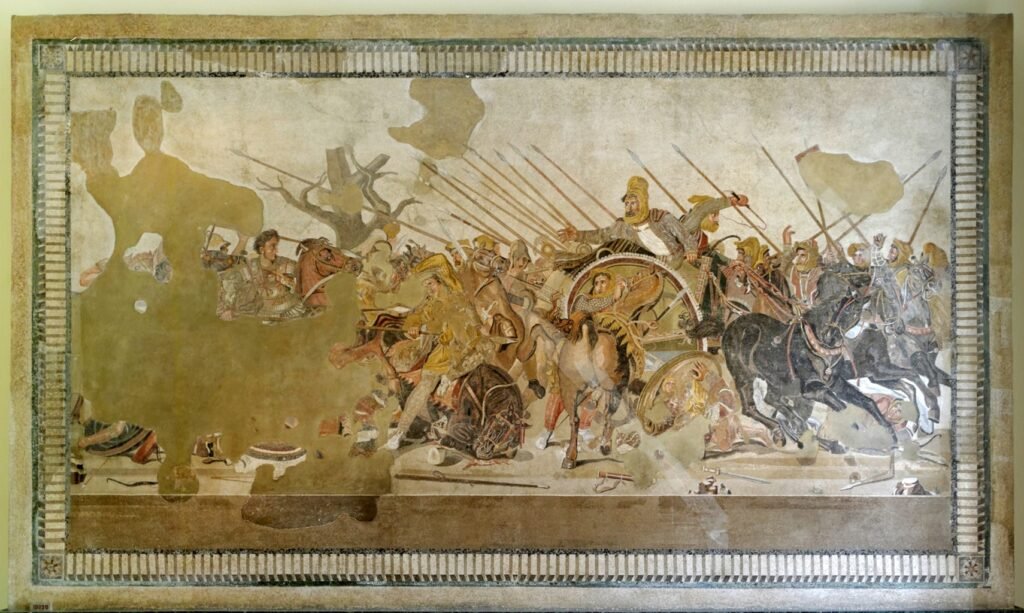
The most prized object was the Alexander Mosaic from the House of the Faun. A vast image of Alexander facing Darius, crafted with extraordinary care. It once lay beneath the feet of a wealthy homeowner, part of everyday life. It was lifted and carried to Naples, admired far from the house it had anchored.
Pompeii survived only because greed could not reach everything.
Before Rome Took Over
Pompeii was not born Roman.
Long before Roman banners and Latin law, the city lived between worlds. Its earliest settlers spoke Oscan, an old Italic language now lost to time. They were traders, not conquerors, people of movement rather than empire. Goods passed through Pompeii from sea to inland Campania. Life grew around exchange, not domination.
Greek sailors and merchants arrived early. Southern Italy was part of Magna Graecia, and Pompeii felt its pull. The Temple of Apollo rose near the heart of the city long before Rome claimed it. Greek gods were worshipped openly. Columns followed Greek proportions. Art borrowed freely. Pompeii learned to look outward, absorbing ideas, beliefs, and styles from across the sea.
Later came the Samnites, mountain warriors from the Apennines. They did not erase what existed. They adapted it. Pompeii became a fortified town. Houses turned inward, built around private courtyards. Streets narrowed. Privacy mattered. Family mattered. The city grew quieter, more enclosed, shaped by the need to protect rather than to impress.
When Rome finally arrived, it came with authority, not curiosity.
During the Social War, Pompeii stood against Rome, choosing alliance with other Italian cities over submission. Rome answered without mercy. In 80 BC, Lucius Cornelius Sulla seized the city and settled his veterans on its land. Their presence changed everything.
Languages shifted. Oscan faded from walls and speech. Latin filled courts and contracts. Roman law took hold. Public spaces were expanded. Baths grew larger. The forum adopted Roman order. Older layers were not destroyed, only buried beneath new ones.
Pompeii was never a single culture. It was Oscan at its roots, shaped by Greek ideas, hardened by Samnite rule, and finally overwritten by Rome.
Rome did not create Pompeii. It claimed it, and left its mark upon a city that had already lived many lives.
Giving Names Back to the Dead
True understanding came with Giuseppe Fiorelli.
Fiorelli was not a treasure hunter shaped by royal taste. He was a scholar, a numismatist, and a political reformer whose liberal beliefs had once pushed him into exile under the Bourbon regime. When he was appointed director of Pompeii in 1860, after the unification of Italy, he arrived with a different instinct. He wanted order, not trophies.
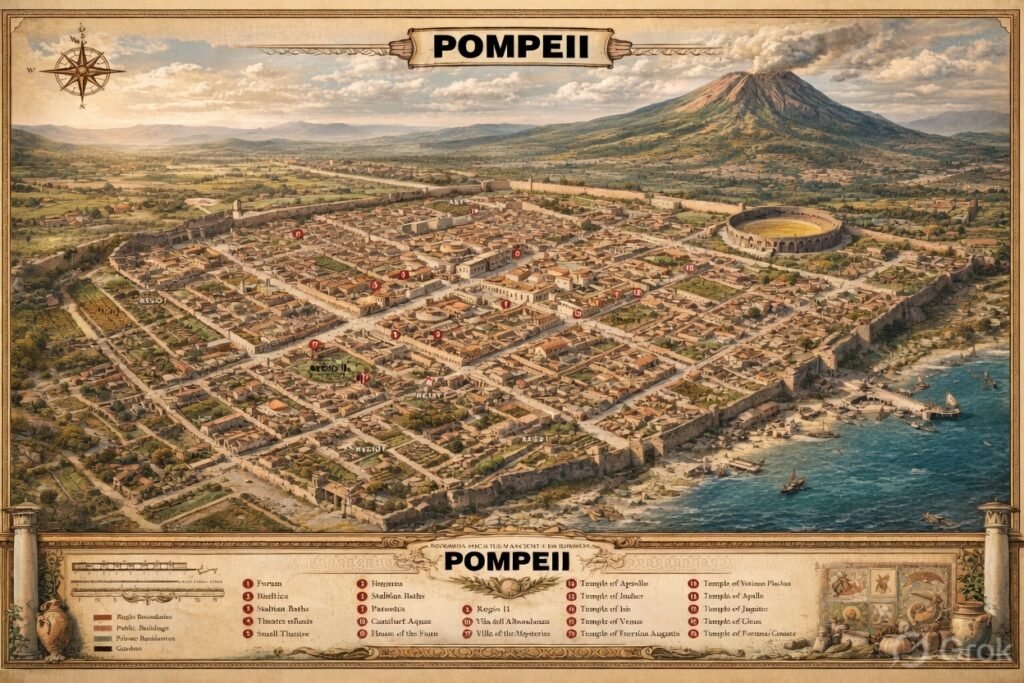
Fiorelli believed Pompeii should be read like a living city, not stripped like a mine. He stopped random excavation and introduced a system that still defines Pompeii today. The city was divided into regiones, large districts marked by Roman numerals. Each regio was broken into insulae, city blocks. Within each insula, individual buildings were numbered.
An address was born.
Regio VI, Insula 15, House 1.
For the first time, Pompeii could be mapped, referenced, understood as a whole. A bakery could be located. A tavern revisited. A home studied in relation to its neighbours. Pompeii stopped being fragments and became a city again.
Then Fiorelli noticed something others had overlooked.
In the hardened ash were hollow spaces. Bodies had decayed, but the ash had preserved their final outlines. In 1863, Fiorelli poured liquid plaster into these voids. When the ash was removed, forms emerged.
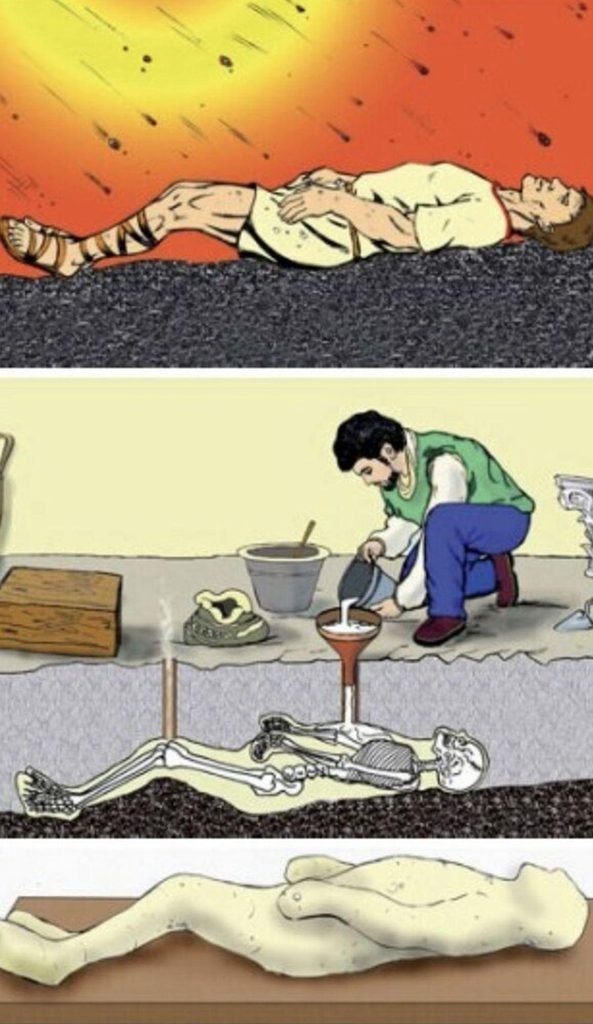
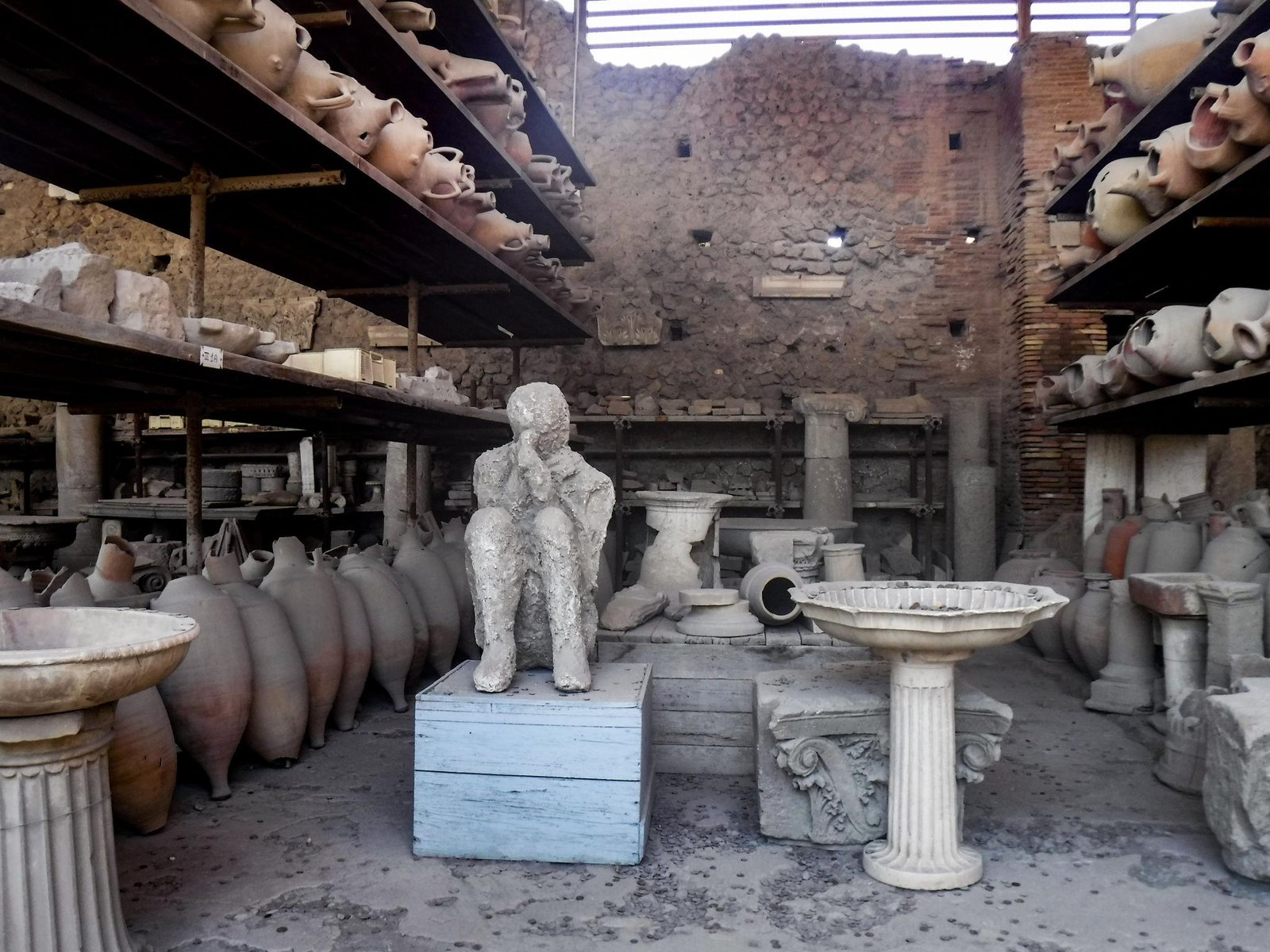
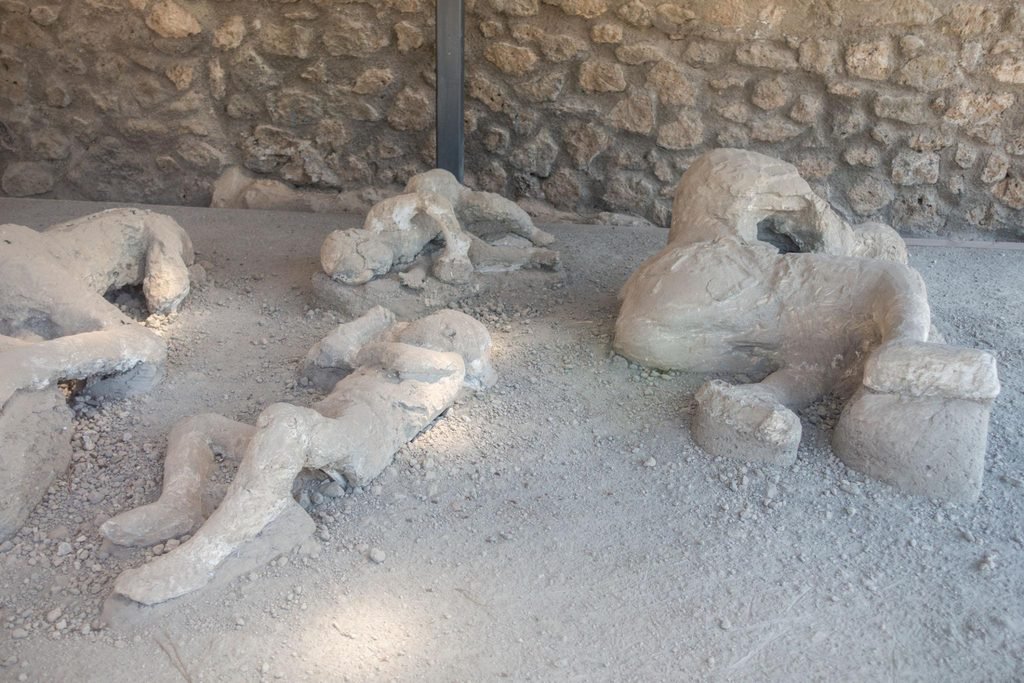
Not statues. People.
A child clinging to an adult. A woman curled inward, perhaps pregnant. A man shielding his face. A dog twisted against its chain, frozen in struggle. More than a hundred such casts were eventually created, including entire groups found in places like the Garden of the Fugitives.
Pompeii was no longer silent stone and empty streets. It had posture. Fear. Intimacy.
Fiorelli’s work changed archaeology itself. Excavation became documentation. Looting became study. Pompeii was no longer admired only for its art, but understood through its people.
The city did not simply return to history.
Under Fiorelli, it returned to life.
Politics Written on Walls
Pompeii argued loudly.
Its walls became public noticeboards. Election slogans were painted by supporters, not officials, scattered across streets and doorways.
“Vote for Cuspius Pansa as aedile. The fruit sellers support him.”
“Epidius is a thief. Beware.”
“The goldsmiths ask you to elect Gaius Julius Polybius.”
Politics was open, messy and personal.
Love notes appeared beside insults. One graffito reads, “Celadus the Thracian gladiator makes the girls sigh.” Another observes, almost amused, “I wonder, wall, that you have not fallen, bearing so many scribbles.”
Shop signs hung over streets. Symbols marked bakeries, taverns, laundries, and brothels. Prices were painted on walls. Promises were made in simple words and images, meant to catch the eye of anyone passing by.
Wine sellers advertised quality. Bakers stamped their names into bread, turning daily food into a brand. Brothels displayed frescoes like menus, leaving nothing to imagination. Even services announced themselves openly, carved or painted where people could not miss them.
In many ways, these walls were Pompeii’s social media. Endorsements, accusations, admiration and humour shared in public view. Time has changed. The medium has changed. But the impulse remains the same. People still argue, promote, mock and declare affection, just using different walls.
Gladiators and Civic Violence
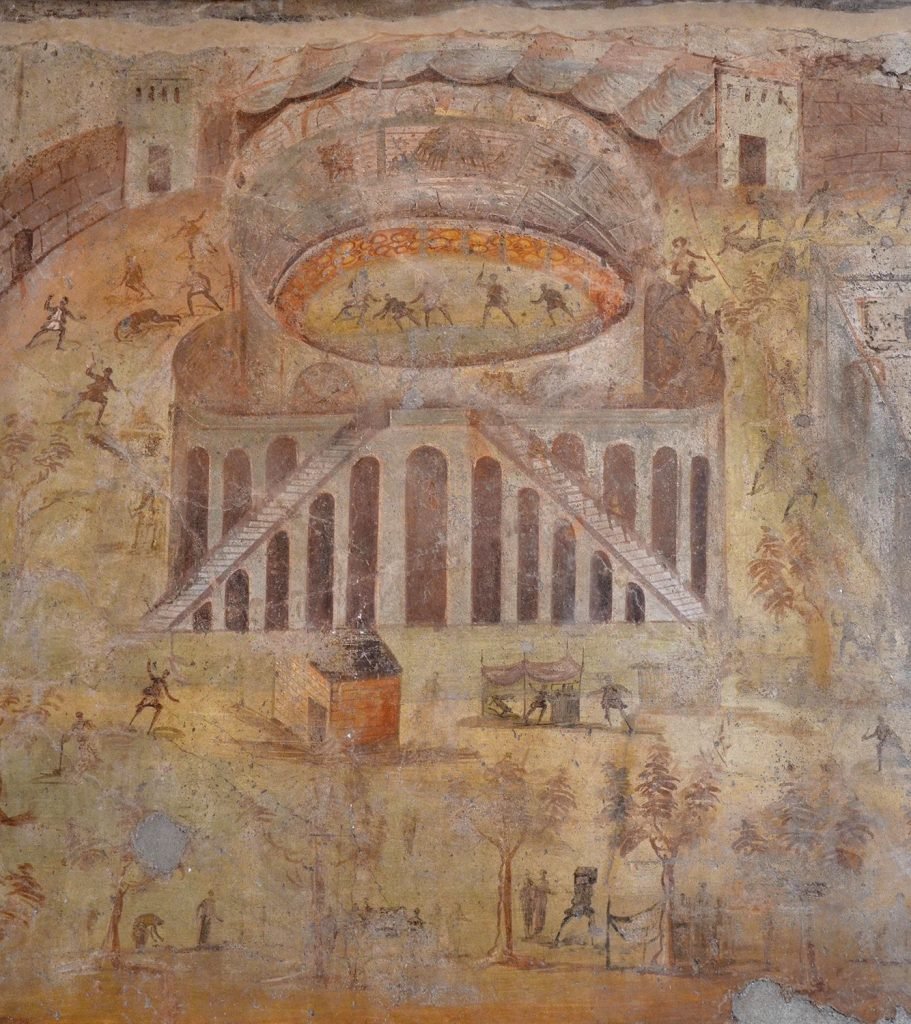
The amphitheatre of Pompeii, built in 70 BC, stood at the edge of the city, where crowds could gather without flooding its streets. Today it is known by its address, Regio II, Insula 7, a name given centuries later but still used to locate it precisely. It seated nearly the entire population of Pompeii.
It was built more than a century before Rome’s Colosseum, a reminder that Pompeii did not wait for the capital to define its culture.
Gladiators were heroes here. Their names were scratched into walls. Their bodies admired. Their deaths accepted as part of the spectacle.
In 59 AD, during games against neighbouring Nuceria, insults turned into violence. Stones were thrown. Blades were drawn. Many died. The disturbance was so severe that the emperor banned gladiatorial games in Pompeii for ten years.
It was a deep humiliation.
Spectacle was not entertainment alone. It was identity.
Baths, Bread and Shared Life
Pompeii lived collectively.
Baths were social centres. Men debated politics while slaves scrubbed their backs. Women visited at separate hours. Heat flowed through floors using advanced systems.
Food stalls sold hot meals. Over two hundred counters lined streets. Bakers branded bread. One surviving loaf bears the stamp of a slave, Celer, whose labour fed others but left him nameless in records.
Slavery Beneath Everything
Slavery sustained Pompeii.
Slaves cooked, cleaned, carried water, ran businesses and warmed baths. They slept in windowless rooms near kitchens or stables. Some gained trust. Most remained invisible.
Plaster casts show slaves dying beside owners. In death, hierarchy disappeared. In life, it governed everything.
Pompeii does not romanticise this. It exposes it.
What Still Waits
Much of Pompeii is exposed now. Millions walk its streets each year, following stone paths worn smooth long before modern shoes touched them. What was once sealed in darkness now stands open to sun, rain, and time.
Excavation proceeds slowly, deliberately. Archaeologists no longer rush to uncover. They hesitate. They measure. They understand that exposure is not rescue, but risk. Once revealed, walls begin to fade. Frescoes breathe for the first time in centuries, and then begin to disappear.
A large part of the city remains buried, nearly one third.
Not forgotten, but protected. Held beneath ash that once destroyed it and now preserves it. Homes still sealed. Streets still silent. Lives paused mid moment, holding surprises that may yet change what we think we know.
Pompeii is Not Gone
Today, Pompeii is still organised exactly as Fiorelli envisioned it. The city is divided into nine regiones, each broken into insulae, each building identified by number. More than thirteen hundred houses and structures have been recorded using this system, from grand villas to modest workshops.
Every address used by archaeologists today follows Fiorelli’s nomenclature. Every excavation report. Every map. Every guided walk.
Long after the ash settled and the looters left, it was Fiorelli who gave Pompeii its order back. Not by rebuilding its walls, but by teaching the world how to read them.
The city still speaks in his language.
For interesting historical stories visit out knowledge center.